Showing posts with label World. Show all posts

Thursday, September 3, 2009

New protests in western China


There have been fresh protests in western China's Xinjiang region, where almost 200 people were killed in ethnic violence in July.

A witness told the BBC that as many as 2,000 ethnic Han Chinese have been demonstrating in the capital Urumqi.

The protesters are said to be angry at the deteriorating security situation in the wake of the July riots.

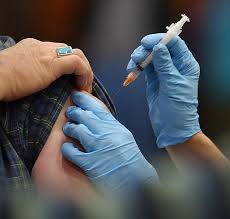
A trigger for the protests appears to have been a spate of unexplained stabbings using hypodermic needles.

July's violence was the worst ethnic unrest in China for decades; at least 197 people died and hundreds injured.

The government says most of the dead were Han, but the exile activist group the World Uighur Congress claims many Uighurs were also killed.

Members of the city's Han community last held mass protests shortly after July's violence by ethnic Uighurs.

Safety fears

A businessman in Urumqi told the BBC that members of the Han community were demonstrating to complain about the worsening security situation.

"Han Chinese people have been protesting in the streets since yesterday," he said.

"Nearly everyone in Urumqi is on strike or protesting. Right now in front of me there are at least 2,000 people," he said from the centre of Urumqi.

Another resident said Han Chinese were concerned for their safety in the wake of the reported syringe attacks.

"The local government is not doing enough to protect Han people there... I am really [worried about] my family and relatives there. I urge [the] Chinese government should do more to prevent this," the resident told the BBC.

Xinhua news agency said the stabbing victims came from nine ethnic groups, including Uighurs and Han.
Protesters have accused the provincial government of being "useless", and some even asked for the dismissal of regional Communist Party boss Wang Lequan, who is thought to be an ally of President Hu Jintao.

Large numbers of police were reported to have turned out to block the protesters from reaching People's Square in the city centre.

There has been tension for many years between Xinjiang's Uighur and Han communities.

Some Uighurs complain that Han migration into the province has diluted their culture and influence.

Han currently account for roughly 40% of Xinjiang's population, while about 45% are Uighurs.

The tensions exploded in early July after an initially peaceful protest by Uighur youths, apparently prompted by an earlier riot in a factory in southern China.

Iran backs first woman minister


Iranian MPs have approved the first woman minister in the 30-year history of the Islamic republic.

She was one of 18 nominations for President Mahmoud Ahmadinejad's new cabinet to be approved. Two other women were among three rejected nominees.

The president's choice for defence minister, Ahmad Vahidi, who is wanted by Argentina over a deadly 1994 bombing of a Jewish centre, won strong backing.

The vote follows months of wrangling after disputed elections in June.

Correspondents say Marzieh Vahid Dastjerdi, the female health minister-designate, is a hard-line conservative who has in the past proposed introducing segregated health care in Iran, with women treating women and men treating men.

The two women rejected were Fatemeh Ajorlou, as welfare and social security minister, and Susan Keshavarz, as education minister.

The third nominee to be turned down was the president's choice for energy minister, Mohammad Aliabadi.

Mr Ahmadinejad has three months to propose new candidates to replace those voted down.

'Real democracy'

The parliamentary confidence vote followed five days of intense debate.

Before the vote, Mr Ahmadinejad urged MPs to approve his choices, saying the ballot reflected "real democracy". His government would work closely with parliament, he said.

The president's proposed oil minister, Massoud Mirkazemi, was approved, despite questions over his experience.

Meanwhile, Mr Vahidi - a controversial figure internationally - received the highest number of votes in favour of any nominee, with 227 MPs backing him out of 286, Speaker Ali Larijani said.

Interpol has distributed Argentina's warrant for Mr Vahidi's arrest over the attack at the Israeli-Argentine Mutual Association (AMIA) 15 years ago, which killed 85 people.

Israel and Argentina had condemned his nomination, with Buenos Aires calling it "an affront to the victims" of the bombing. Iran has denied any involvement in the blast and says the case against it is politically motivated.

Each nominee had to secure the support of at least 50% of MPs to be confirmed.

The BBC's Peter Biles says the vote was a key test of the president's support and his hold on power, amid continuing opposition following his re-election in a contested presidential ballot in June.

The appointment of the cabinet also comes at a time of increasing pressure on the Iranian government from abroad, our correspondent says.

US President Barack Obama has given Iran until later this month to agree to new talks on its nuclear programme, or face tougher sanctions.

Iran has said it is ready to present a new package of proposals to the international community, although the details have not been published.

An aide to Mr Ahmadinejad said on Thursday that the president would attend a United Nations meeting later this month in New York.

Tuesday, September 1, 2009

Obama aides see need for more troops in Afghanistan...


* White House wariness reflects waning public support

* Obama needs to prepare U.S. public for troop increase

* Commanding general calls for fresh strategy

By Adam Entous and Arshad Mohammed

WASHINGTON, Aug 31 (Reuters) - Many of President Barack Obama's top advisers on Afghanistan agree with military commanders that more troops are needed to reverse Taliban gains in the country's east and south, U.S. officials said on Monday.

But there is wariness within the White House to another large-scale increase at a time when public support for the eight-year-old war against a resurgent Taliban is eroding, the officials said, speaking on condition of anonymity.

Military commanders and administration and congressional leaders have held preliminary discussions about future troop options, including sending a second 5,000-member Marine Regimental Combat Team to southern Afghanistan, a Taliban stronghold, participants said. This would boost the number of Marines in the country to 15,000-18,000 from just over 10,000.

The debate is expected to intensify after Monday's long-awaited assessment of the war by U.S. Army Gen. Stanley McChrystal, commander of U.S. and NATO forces in Afghanistan.

McChrystal called for the United States and its allies to change strategy, laying the ground for a likely request for more troops later, officials said. [nISL129837]

McChrystal has about 103,000 troops under his command, including 63,000 Americans, half of whom arrived this year as part of an escalation strategy started by former President George W. Bush and ramped up under Obama.

The force is set to rise to 110,000, including 68,000 Americans, by year's end, stretching the U.S. military to its limits, military officials said.

U.S. officials said further troop increases would hinge in part on the pace at which combat brigades could be pulled out of Iraq and redeployed to Afghanistan.

Another key factor, the officials said, was whether Obama would make a concerted effort to overcome growing public opposition to the war, fueled by record U.S. combat deaths.

Pressure from within the president's Democratic party for a withdrawal timeline is expected to increase in the run-up to next year's mid-term U.S. congressional elections.

"There is great awareness over at the White House ... that support in the public is really declining," one official said.

Another U.S. official said Obama had not yet prepared the American people for what many top advisers see as an inevitable need to increase the number of troops in Afghanistan.

"The question is not only can you rotate a sufficient number out of Iraq," he said "What the administration has to do is politically make sure that they prepare the ground for it."

"Half-measures are not going to work," the official added. "They haven't worked in the past."

HARD-SELL

It is unclear how much room Obama has to maneuver. With his popularity dented by a raucous debate over healthcare reform and the electorate still shaken by the recession, Obama may also be loath to push an unpopular policy right now.

U.S. Defense Secretary Robert Gates said on Monday McChrystal should be "forthright" about spelling out what he needs in terms of troops and equipment, but he also made clear that another major troop increase would face hurdles.

"I have expressed some concerns in the past about the size of the American footprint, the size of the foreign military footprint, in Afghanistan, and clearly I want to address those issues," Gates said during a visit to Fort Worth, Texas.

"And we will have to look at the availability of forces, we'll have to look at cost. There are a lot of different things that we'll have to look at once we get his recommendations, before we make any recommendations to the president."

Obama's advisers on Afghanistan are particularly sympathetic to pleas for more resources in eastern Afghanistan near the border with Pakistan, where veteran Taliban leader Jalaluddin Haqqani is now seen as the main threat.

A rapid deterioration in the war in the east has taken U.S. officials by surprise. In April, a senior commander said NATO forces were close to achieving "irreversible momentum" there.

Anthony Cordesman, an expert with the Center for Strategic and International Studies in Washington, said "strong elements" in the White House, State Department and other agencies were pressing Obama to avoid sending more troops and money.

"If these elements succeed, President Obama will be as much a failed wartime president as George W. Bush," he wrote in Monday's Washington Post, saying such an approach would condemn the United States to "certain defeat

Saturday, August 29, 2009

UAE seized N.Korea arms shipment bound for Iran


* Arms included rocket launchers, detonators, RPGs

* Seizure of shipment took place on Aug. 14

* Countries linked include Australia, France, Italy, China

(Adds details about weapons, countries involved)

By Louis Charbonneau

UNITED NATIONS, Aug 28 (Reuters) - The United Arab Emirates has seized a cargo of North Korean weapons being shipped to Iran, which would have violated a U.N. embargo on arms exports from the communist state, Western diplomats said on Friday.

The weapons seized on Aug. 14 included rocket launchers, detonators, munitions and ammunition for rocket-propelled grenades, they said. The ship, called the ANL-Australia, was Australian-owned and flying a Bahamas flag.

Diplomats said the UAE reported the incident, which occurred two weeks ago, to the Security Council sanctions committee on North Korea. The committee sent letters to Tehran and Pyongyang on Aug. 25 informing them of the seizure and demanding a response within 15 days.

"Based on past experience ... we don't expect a very detailed response," one of the diplomats said on condition of anonymity.

The diplomats said the Australian firm whose ship was seized is controlled by a French conglomerate and the actual export was arranged by the Shanghai office of an Italian company. The diplomats did not name any of the firms involved.

"The cargo was deceptively labeled," said a diplomat "The cargo manifest said that the ship contained oil boring machines. But then you opened it up and you found these arms."

Diplomats said both North Korea and Iran appeared to be in breach of Security Council resolution 1874, which banned all arms exports from North Korea and authorized states to search suspicious ships and seize and destroy banned items.

The resolution was imposed after North Korea's second nuclear test in May. The council imposed sanctions on Pyongyang after its first test in October 2006, but the measures were never enforced, mainly because China showed no interest in seeing them implemented.

Diplomats said the UAE seizure, which was done on the basis of the country's own intelligence reports, was an important success for the beefed-up North Korean sanctions regime and would hopefully deter further attempts at skirting sanctions.

Tehran has also been punished with three rounds of U.N. sanctions for its nuclear program, which Western powers fear is aimed at producing atomic weapons. Iran says it has a peaceful atomic program that will generate electricity, not bombs.

Friday, August 28, 2009

Israel's Netanyahu given Holocaust plans in Berlin


BERLIN (Reuters) – Israeli Prime Minister Benjamin Netanyahu said on a visit to Germany on Thursday that one lesson Israel drew from the Holocaust was that threats to its existence could not go unchallenged and must be "nipped in the bud".

German journalists handed the Israeli leader, in Berlin for talks with Chancellor Angela Merkel, a portfolio of 29 plans from the Auschwitz death camp discovered last year.

With his wife Sara at his side, Netanyahu said her father's family had been nearly wiped out by Nazis in World War Two.

"We cannot allow evil to prepare the mass death of innocents. The most important thing to do is to nip it in the bud," said Netanyahu, alluding to past threats by Iranian President Mahmoud Ahmadinejad to wipe Israel off the map.

In their talks, Netanyahu and Merkel discussed Iran's disputed nuclear program, which Israel sees as a threat to its existence. Netanyahu is keen for tougher Western sanctions against Iran to halt Tehran's nuclear program.

Netanyahu said Allied powers had failed to act in time to prevent Nazis killing 6 million Jews in the Holocaust.

"Armed barbarism knows no limits," he said. "It has to be unarmed, disarmed in time."

He said it was important for leaders of other nations to "recognize their own fate is imperiled by those who threaten our fate".

"We cannot allow this to be repeated. We, means the whole civilized world. We cannot allow those who wish to perpetrate mass death, those who call for the destruction of the Jewish people to go unchallenged."

Western powers believes Iran's activities are aimed at developing a nuclear bomb but Iran says its program is aimed at civil nuclear energy.

The Holocaust remains a powerful emotional symbol casting a shadow over Israeli relations with Germany.

Before returning to Israel later on Thursday, Netanyahu is to visit the site of the 1942 Wannsee conference in Berlin, where Nazi leaders drew up plans for their so-called "Final Solution" to exterminate Jews.

Kai Diekmann, editor of Bild, Germany's top-selling newspaper, said as he handed Netanyahu the plans that there could never be a real normalization of German-Israeli relations after the Holocaust.

"These plans remind us of a crime that with the passing of time seems ever more incomprehensible," Diekmann said, adding they were the "original blueprints for the most inhumane project in mankind ... the plans of hell".

Bild newspaper has said the documents, which include architects' drawings of rooms including one marked "Gaskammer", or gas chamber, are believed to have been discovered when a Berlin flat was cleaned out.

Accompanying Netanyahu on his trip to Germany is a government minister who lost his father and other family members at Auschwitz-Birkenau, the biggest concentration camp where at least 1.1 million Jews were killed.

Flu epidemic starts early in Japan, WHO says


* Flu still spreading widely in South Africa, Bolivia

* May make flu season start early in Northern Hemisphere

WASHINGTON, Aug 28 (Reuters) - The new H1N1 swine flu has reached epidemic levels in Japan, signaling the early start to what may be a long influenza season this year, and it is also worsening in tropical regions, the World Health Organization said on Friday.

But circulation may have passed its peak in much of the Southern Hemisphere, although it is still midwinter there, WHO said in a regular update on the pandemic.

"In Japan, the level of influenza activity has passed the seasonal epidemic threshold, signaling a very early beginning to the annual influenza season," WHO said in its weekly update on the pandemic.

H1N1 swine flu is now just about everywhere and has been officially a pandemic since June. But, like any infectious disease, it does not spread evenly and can pop up in different communities at different times.

It has continued to spread, at low levels, in the Northern Hemisphere throughout the summer even though influenza rarely spreads in summer. And even where it is flu season, H1N1 is the dominant strain, sickening far more people than seasonal strains of flu.

"In the Southern Hemisphere, most countries (represented by Chile, Argentina, New Zealand, and Australia) appear to have passed their peak of influenza activity," WHO said.

"A few others (represented by South Africa and Bolivia) continue to experience high levels of influenza activity," it added.

More countries are testing the virus to make sure it can be controlled by oseltamivir, the antiviral drug sold by Roche AG under the brand name Tamiflu. So far it does, with a few rare exceptions, WHO said.

Every year, seasonal flu infects between 5 percent and 20 percent of a given population and kills between 250,000 and 500,000 people globally. Because hardly anyone has immunity to the new H1N1 virus, experts believe it will infect far more people that usual, as much as a third or more of the population.

It also disproportionately affects younger people, unlike seasonal flu which mainly burdens the elderly, and thus may cause more severe illness and deaths among young adults and children than seasonal flu does.

Most at risk are pregnant women, people with chronic diseases such as asthma or diabetes and, some studies suggest, perhaps the obese

After Kennedy's Death: Silence from the Pope


There was a poignant footnote to President Obama's historic July 10 meeting with Pope Benedict XVI at the Vatican. Behind closed doors in the papal library, Obama handed Benedict a letter that Senator Edward Kennedy had asked him to personally deliver to the pontiff. White House spokesman Robert Gibbs later told reporters that nobody - not even the President - knew the contents of the sealed missive. Obama himself asked Benedict to pray for Kennedy, and called the ailing Senator afterward to fill him in on his encounter with the 82-year-old Pope.

The letter, most likely already re-sealed and tucked away in the Vatican archives, was probably just a dying Catholic's request for a papal blessing. In the eyes of the traditionalist wing of the Church, however, Kennedy should have been asking the Pope for forgiveness. The Vatican's official newspaper L'Osservatore Romano reported Kennedy's death, praising his work on civil rights and fighting poverty, but noted that his record was marred by his stance on abortion. As of yet, unlike some other world leaders, Pope Benedict has not commented or issued an official communique in response to Kennedy's death. One veteran official at the Vatican, of U.S. nationality, expressed the view of many conservatives about the Kennedy clan's rapport with the Catholic Church: "Why would he even write a letter to the Pope? The Kennedys have always been defiantly in opposition to the Roman Catholic magisterium." Magisterium is the formal expression for the authority of Church teaching. (See a Kennedy family photo album.)

Since Kennedy's death on Aug. 25, commentators have been poring over the Liberal Lion's many legislative achievements and the details of his biography. But it is also worth remembering that for four decades Ted Kennedy remained the nation's most prominent Roman Catholic politician, and brother of America's first and only Catholic President. Ted Kennedy received his first communion directly from Pope Pius XII, and his marriage in 1958 was performed by Cardinal Francis Spellman, the influential Archbishop of New York. His mother, Rose Kennedy, once reportedly said that she'd dreamed that her youngest son Teddy would become a priest rather than a politician, destined to ultimately rise to bishop status. (See pictures of Pope Benedict XVI visiting America.)

Edward Kennedy, it can be said, was not cut out for the priestly life. His first marriage to former model Virginia Joan Bennett, ended in divorce in 1982, with the marriage annulled by the Roman Rota more than a decade later. And there are the infamous episodes in his life that showed a man not quite in control of his demons. But ultimately, beyond his personal travails, Kennedy's relationship with the Church hierarchy was destined for conflict because of politics. The Senator became both the face and engine of the liberal wing of the Democratic party that has long led the battle for abortion rights, stem cell research and gay marriage, all of which Catholic doctrine strictly forbids.

"He is a complicated figure," says Rev. James Martin, a Jesuit priest and the culture editor of the Catholic magazine America. "Catholics on the right are critical because of his stance on abortion. Catholics on the left celebrate his achievements on immigration, fighting poverty and other legislation that is a virtual mirror of the Church's social teaching." (See pictures of the lion of the senate, Ted Kennedy.)

Back at headquarters, however, there is little room for nuance. "Here in Rome Ted Kennedy is nobody. He's a legend with his own constituency," says the Vatican official. "If he had influence in the past it was only with the Archdiocese of Boston and that eventually disappeared too." Some say the final sunset on the Kennedy name within Catholic halls of power was the Vatican's decision in 2007 to overturn the annulment of the first marriage of former U.S. Rep. Joe Kennedy, the eldest son of Robert Kennedy. The successful appeal by Joe Kennedy's ex-wife Sheila Rauch, an Episcopalian, was another blow for the Kennedy image in Catholic circles.

During Benedict's 2008 trip to the U.S., there was some heated debate (with conflicting photographs and eyewitness accounts) about whether or not Kennedy took Holy Communion at the papal mass at Nationals Stadium in Washington, with conservatives insisting that the Pope says the rite should be denied to pro-choice politicians. With this in mind, Church observers are keen to see if Boston's Archbishop Cardinal Sean O'Malley will preside over Kennedy's funeral.

In what may mark the final flicker of Kennedy influence in American Catholicism, reports circulated last spring that Obama was considering JFK's daughter, Caroline Kennedy, as the possible next U.S. Ambassador to the Vatican. That was not to be. Indeed in the wake of Uncle Ted's death came word Thursday that Obama's final choice had arrived in Rome to take up the diplomatic post at the Holy See. His name is Miguel Diaz, a little-known Cuban-born professor of theology firmly on the record as pro-life.