Showing posts with label crisis. Show all posts

Tuesday, September 1, 2009

Obama aides see need for more troops in Afghanistan...


* White House wariness reflects waning public support

* Obama needs to prepare U.S. public for troop increase

* Commanding general calls for fresh strategy

By Adam Entous and Arshad Mohammed

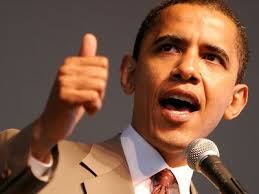
WASHINGTON, Aug 31 (Reuters) - Many of President Barack Obama's top advisers on Afghanistan agree with military commanders that more troops are needed to reverse Taliban gains in the country's east and south, U.S. officials said on Monday.

But there is wariness within the White House to another large-scale increase at a time when public support for the eight-year-old war against a resurgent Taliban is eroding, the officials said, speaking on condition of anonymity.

Military commanders and administration and congressional leaders have held preliminary discussions about future troop options, including sending a second 5,000-member Marine Regimental Combat Team to southern Afghanistan, a Taliban stronghold, participants said. This would boost the number of Marines in the country to 15,000-18,000 from just over 10,000.

The debate is expected to intensify after Monday's long-awaited assessment of the war by U.S. Army Gen. Stanley McChrystal, commander of U.S. and NATO forces in Afghanistan.

McChrystal called for the United States and its allies to change strategy, laying the ground for a likely request for more troops later, officials said. [nISL129837]

McChrystal has about 103,000 troops under his command, including 63,000 Americans, half of whom arrived this year as part of an escalation strategy started by former President George W. Bush and ramped up under Obama.

The force is set to rise to 110,000, including 68,000 Americans, by year's end, stretching the U.S. military to its limits, military officials said.

U.S. officials said further troop increases would hinge in part on the pace at which combat brigades could be pulled out of Iraq and redeployed to Afghanistan.

Another key factor, the officials said, was whether Obama would make a concerted effort to overcome growing public opposition to the war, fueled by record U.S. combat deaths.

Pressure from within the president's Democratic party for a withdrawal timeline is expected to increase in the run-up to next year's mid-term U.S. congressional elections.

"There is great awareness over at the White House ... that support in the public is really declining," one official said.

Another U.S. official said Obama had not yet prepared the American people for what many top advisers see as an inevitable need to increase the number of troops in Afghanistan.

"The question is not only can you rotate a sufficient number out of Iraq," he said "What the administration has to do is politically make sure that they prepare the ground for it."

"Half-measures are not going to work," the official added. "They haven't worked in the past."

HARD-SELL

It is unclear how much room Obama has to maneuver. With his popularity dented by a raucous debate over healthcare reform and the electorate still shaken by the recession, Obama may also be loath to push an unpopular policy right now.

U.S. Defense Secretary Robert Gates said on Monday McChrystal should be "forthright" about spelling out what he needs in terms of troops and equipment, but he also made clear that another major troop increase would face hurdles.

"I have expressed some concerns in the past about the size of the American footprint, the size of the foreign military footprint, in Afghanistan, and clearly I want to address those issues," Gates said during a visit to Fort Worth, Texas.

"And we will have to look at the availability of forces, we'll have to look at cost. There are a lot of different things that we'll have to look at once we get his recommendations, before we make any recommendations to the president."

Obama's advisers on Afghanistan are particularly sympathetic to pleas for more resources in eastern Afghanistan near the border with Pakistan, where veteran Taliban leader Jalaluddin Haqqani is now seen as the main threat.

A rapid deterioration in the war in the east has taken U.S. officials by surprise. In April, a senior commander said NATO forces were close to achieving "irreversible momentum" there.

Anthony Cordesman, an expert with the Center for Strategic and International Studies in Washington, said "strong elements" in the White House, State Department and other agencies were pressing Obama to avoid sending more troops and money.

"If these elements succeed, President Obama will be as much a failed wartime president as George W. Bush," he wrote in Monday's Washington Post, saying such an approach would condemn the United States to "certain defeat

Saturday, August 29, 2009

UAE seized N.Korea arms shipment bound for Iran


* Arms included rocket launchers, detonators, RPGs

* Seizure of shipment took place on Aug. 14

* Countries linked include Australia, France, Italy, China

(Adds details about weapons, countries involved)

By Louis Charbonneau

UNITED NATIONS, Aug 28 (Reuters) - The United Arab Emirates has seized a cargo of North Korean weapons being shipped to Iran, which would have violated a U.N. embargo on arms exports from the communist state, Western diplomats said on Friday.

The weapons seized on Aug. 14 included rocket launchers, detonators, munitions and ammunition for rocket-propelled grenades, they said. The ship, called the ANL-Australia, was Australian-owned and flying a Bahamas flag.

Diplomats said the UAE reported the incident, which occurred two weeks ago, to the Security Council sanctions committee on North Korea. The committee sent letters to Tehran and Pyongyang on Aug. 25 informing them of the seizure and demanding a response within 15 days.

"Based on past experience ... we don't expect a very detailed response," one of the diplomats said on condition of anonymity.

The diplomats said the Australian firm whose ship was seized is controlled by a French conglomerate and the actual export was arranged by the Shanghai office of an Italian company. The diplomats did not name any of the firms involved.

"The cargo was deceptively labeled," said a diplomat "The cargo manifest said that the ship contained oil boring machines. But then you opened it up and you found these arms."

Diplomats said both North Korea and Iran appeared to be in breach of Security Council resolution 1874, which banned all arms exports from North Korea and authorized states to search suspicious ships and seize and destroy banned items.

The resolution was imposed after North Korea's second nuclear test in May. The council imposed sanctions on Pyongyang after its first test in October 2006, but the measures were never enforced, mainly because China showed no interest in seeing them implemented.

Diplomats said the UAE seizure, which was done on the basis of the country's own intelligence reports, was an important success for the beefed-up North Korean sanctions regime and would hopefully deter further attempts at skirting sanctions.

Tehran has also been punished with three rounds of U.N. sanctions for its nuclear program, which Western powers fear is aimed at producing atomic weapons. Iran says it has a peaceful atomic program that will generate electricity, not bombs.

Friday, August 28, 2009

Flu epidemic starts early in Japan, WHO says


* Flu still spreading widely in South Africa, Bolivia

* May make flu season start early in Northern Hemisphere

WASHINGTON, Aug 28 (Reuters) - The new H1N1 swine flu has reached epidemic levels in Japan, signaling the early start to what may be a long influenza season this year, and it is also worsening in tropical regions, the World Health Organization said on Friday.

But circulation may have passed its peak in much of the Southern Hemisphere, although it is still midwinter there, WHO said in a regular update on the pandemic.

"In Japan, the level of influenza activity has passed the seasonal epidemic threshold, signaling a very early beginning to the annual influenza season," WHO said in its weekly update on the pandemic.

H1N1 swine flu is now just about everywhere and has been officially a pandemic since June. But, like any infectious disease, it does not spread evenly and can pop up in different communities at different times.

It has continued to spread, at low levels, in the Northern Hemisphere throughout the summer even though influenza rarely spreads in summer. And even where it is flu season, H1N1 is the dominant strain, sickening far more people than seasonal strains of flu.

"In the Southern Hemisphere, most countries (represented by Chile, Argentina, New Zealand, and Australia) appear to have passed their peak of influenza activity," WHO said.

"A few others (represented by South Africa and Bolivia) continue to experience high levels of influenza activity," it added.

More countries are testing the virus to make sure it can be controlled by oseltamivir, the antiviral drug sold by Roche AG under the brand name Tamiflu. So far it does, with a few rare exceptions, WHO said.

Every year, seasonal flu infects between 5 percent and 20 percent of a given population and kills between 250,000 and 500,000 people globally. Because hardly anyone has immunity to the new H1N1 virus, experts believe it will infect far more people that usual, as much as a third or more of the population.

It also disproportionately affects younger people, unlike seasonal flu which mainly burdens the elderly, and thus may cause more severe illness and deaths among young adults and children than seasonal flu does.

Most at risk are pregnant women, people with chronic diseases such as asthma or diabetes and, some studies suggest, perhaps the obese